What Your Vehicle's Warning Lights Mean: A Driver's Guide
Modern vehicles use dashboard warning lights to communicate important information about your car's systems. These lights serve as your vehicle's way of telling you when something needs attention—from minor maintenance reminders to serious safety concerns that require immediate action.
For drivers around Hemlock and throughout Saginaw County, knowing what these warning lights mean can be the difference between a minor repair and a major breakdown on Michigan's busy roads. Whether you're commuting to Midland or driving the rural routes around Hemlock, recognizing these signals helps keep you safe and prevents costly damage.
Here's your complete guide to the most common warning lights and what action you should take when they appear.
Red Warning Lights: Stop Driving Immediately
Red warning lights indicate serious problems that could cause vehicle damage or safety hazards. When you see a red light, pull over safely as soon as possible and address the issue before continuing to drive.
Engine Temperature Warning Light
This light (usually a thermometer in water) means your engine is overheating. Continuing to drive can cause catastrophic engine damage.
Immediate action:
- Pull over safely and turn off the engine
- Wait for the engine to cool completely
- Check coolant levels only when cool
- Do not remove the radiator cap when hot
Michigan's extreme temperatures put extra stress on cooling systems, making overheating more common during hot summers and when heating systems work overtime in winter.
Oil Pressure Warning Light
The oil can symbol indicates dangerous low oil pressure. Your engine needs proper oil pressure to lubricate moving parts and prevent severe damage.
What to do:
- Stop driving immediately
- Check oil level with the dipstick
- Add oil if level is low
- Seek professional help if oil level is adequate but light remains on
Never ignore oil pressure warnings. Engine damage from low oil pressure can cost thousands of dollars to repair.
Brake System Warning Light
This light indicates problems with your braking system—a critical safety concern, especially on Michigan's icy winter roads.
Possible causes:
- Low brake fluid
- Worn brake pads
- Brake system malfunction
- Parking brake still engaged
Check that your parking brake is fully released. If the light stays on, have your brakes inspected immediately.
Yellow/Orange Warning Lights: Address Soon
Yellow or orange lights indicate issues that need attention but usually allow you to continue driving to seek help. However, don't ignore these warnings for long.
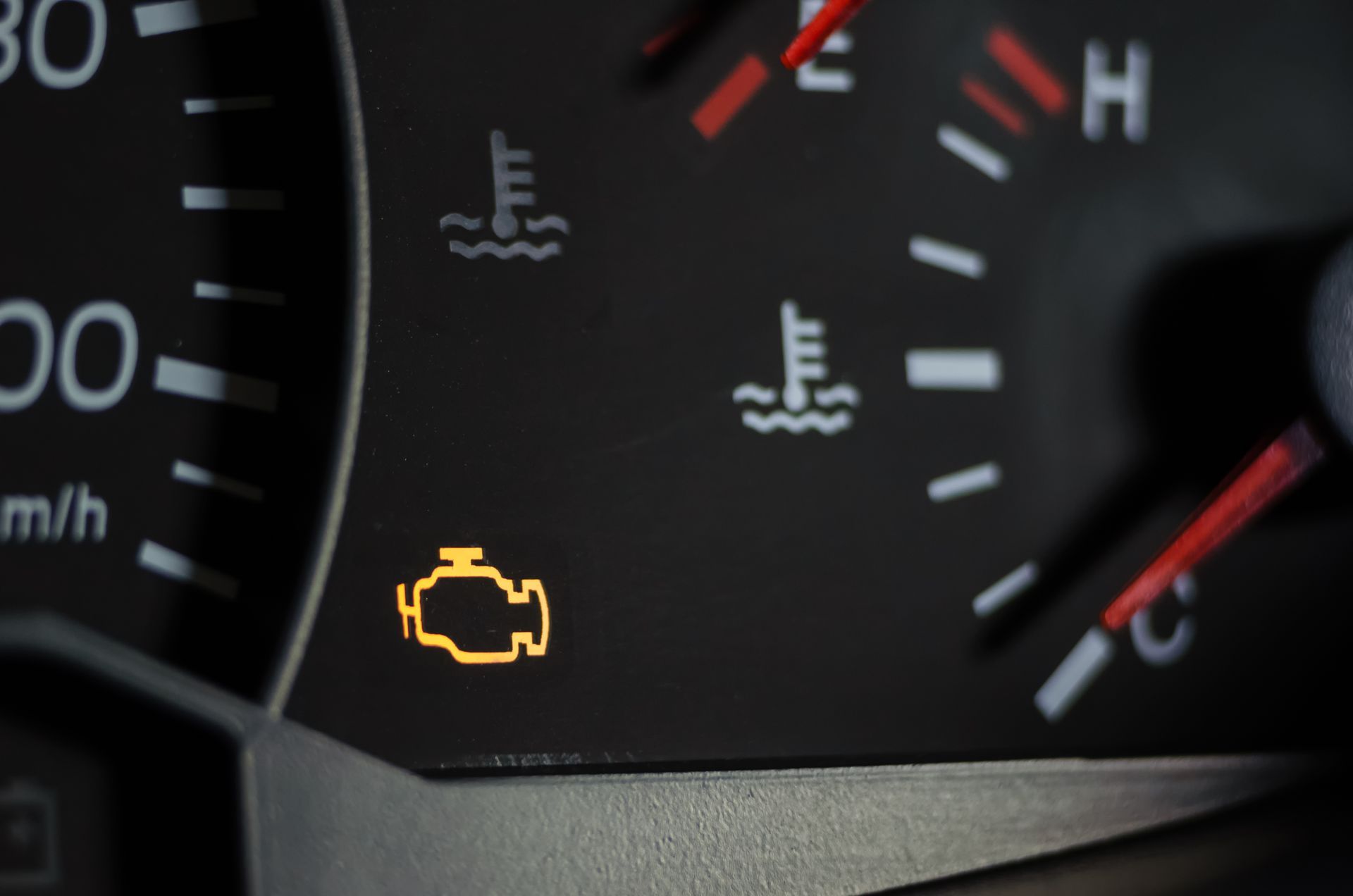
Check Engine Light
The check engine light can indicate anything from a loose gas cap to serious engine problems. Modern vehicles have sophisticated computer systems that monitor dozens of components.
Common causes:
- Loose or faulty gas cap
- Faulty oxygen sensors
- Catalytic converter problems
- Spark plug or ignition issues
While you can usually continue driving, have the issue diagnosed soon. Ignoring check engine lights can lead to more expensive repairs and poor fuel economy.
Battery/Charging System Light
This light (usually a battery symbol) indicates problems with your charging system. Your battery isn't getting properly charged, which will eventually leave you stranded.
What it means:
- Faulty alternator
- Loose or damaged drive belt
- Battery connections problems
- Failing battery
Have your charging system tested promptly. Around Hemlock's rural areas, getting stranded with a dead battery can be especially inconvenient.
Tire Pressure Monitoring System (TPMS) Light
This light tells you that one or more tires has significantly low pressure. Proper tire pressure is crucial for safe handling and fuel economy.
Steps to take:
- Check tire pressure on all tires including spare
- Inflate tires to recommended pressure
- Look for signs of punctures or damage
- Have tires inspected if pressure drops repeatedly
Michigan's temperature changes cause tire pressure to fluctuate naturally, but don't assume that's always the cause.
Transmission Temperature Light
This light indicates your transmission is running too hot. Overheated transmissions can suffer expensive damage.
Immediate actions:
- Reduce speed and avoid heavy acceleration
- Pull over if temperature continues climbing
- Check transmission fluid level when cool
- Seek professional diagnosis
Blue and Green Lights: Information Only
Blue and green lights typically provide information about normal system operation rather than indicating problems.
High Beam Indicator (Blue)
Shows when your high beam headlights are on. Make sure to dim them for oncoming traffic.
Turn Signal Indicators (Green)
Flash to show which direction you're signaling. If they flash faster than normal, you may have a burned-out bulb.
Coolant Temperature (Blue)
Indicates your engine is still warming up. The light should go off once your engine reaches normal operating temperature.
Warning Light Best Practices
When any warning light appears:
- Note the color and symbol
- Check your owner's manual for specific meanings
- Consider the severity based on color
- Don't ignore lights hoping they'll go away
- Keep a record of when lights appear and disappear
Regular maintenance prevents many warning lights:
- Keep up with scheduled oil changes
- Monitor fluid levels monthly
- Check tire pressure regularly
- Replace worn parts before they fail
Modern Vehicle Complexity
Today's vehicles have more warning lights than ever before. Advanced safety systems, emissions controls, and computer-managed components all have their own monitoring systems. While this complexity can seem overwhelming, these systems help prevent problems and protect your investment.
Some newer vehicles also display warning messages in addition to lights, providing more specific information about problems and recommended actions.
When to Seek Professional Help
While some warning lights indicate simple issues you can address yourself (like low tire pressure), others require professional diagnosis and repair. Modern vehicles need sophisticated diagnostic equipment to properly identify problems.
Seek professional help for:
- Any red warning lights
- Check engine lights that persist
- Multiple warning lights appearing together
- Warning lights that come and go intermittently
- Any lights you don't recognize
Don't Ignore Your Vehicle's Warnings
Warning lights are your vehicle's way of protecting itself and keeping you safe. Ignoring these signals can turn minor issues into major repairs and potentially dangerous situations.
At Hemlock Auto & Alignment, our ASE-certified technicians use advanced diagnostic equipment to quickly identify what your warning lights mean and provide accurate repair recommendations. We understand that warning lights can be confusing and stressful, so we take time to explain what we find and what needs to be done.
Located at 16575 Gratiot Road in Hemlock, we serve drivers throughout Saginaw County with honest diagnostic services backed by our 36-month/36,000-mile warranty. Our modern diagnostic tools can communicate with your vehicle's computer systems to pinpoint problems quickly and accurately.
Don't drive around wondering what that warning light means. Call us at (989) 642-4423 or schedule online for professional diagnostic service. Let our experienced team help decode your vehicle's warning lights and keep you safely on the road—because knowing what your car is trying to tell you is the first step to reliable transportation.